
Turkey jerky is the leaner cousin of beef jerky — fewer calories per ounce, plenty of protein, and a mild flavor that soaks up marinades beautifully. If you already know how to make beef jerky, turkey is actually easier: the meat is softer, slices cleanly, and dries faster.
Below is a method that works in both a dehydrator and an oven and aims for chewy, deeply flavored strips with no rubbery spots, while following USDA FSIS and NCHFP guidance on safe temperatures.
Why Turkey Jerky?
Turkey breast runs about 25 g of protein per ounce of finished jerky versus 9–11 g of fat per ounce in many beef jerkies. It’s also easier to find very lean cuts at any grocery store — boneless turkey breast has almost no intramuscular fat to trim.
If you’re curious how it stacks up nutritionally against the popular commercial brands, see our is beef jerky healthy breakdown. The calorie math is similar but turkey almost always wins on fat.
What You’ll Need
- Turkey breast — 2 lbs boneless, skinless. One large breast is usually enough.
- Marinade ingredients — soy sauce, Worcestershire, garlic powder, smoked paprika, black pepper, brown sugar (recipe below).
- Dehydrator or oven — a food dehydrator is ideal. If you’re choosing one, our best jerky dehydrator guide covers three tested machines. An oven works too if it can hold 140 °F; check with an oven thermometer, because many ovens cannot go that low.
- Sharp knife or meat slicer — consistent slices are critical for even drying.
Step 1 — Freeze the Turkey (20–30 Minutes)
Pop the breast in the freezer for 20–30 minutes. Partially frozen meat slices far more cleanly than room-temperature meat. This single step has the biggest impact on slice quality.
Step 2 — Slice Against the Grain
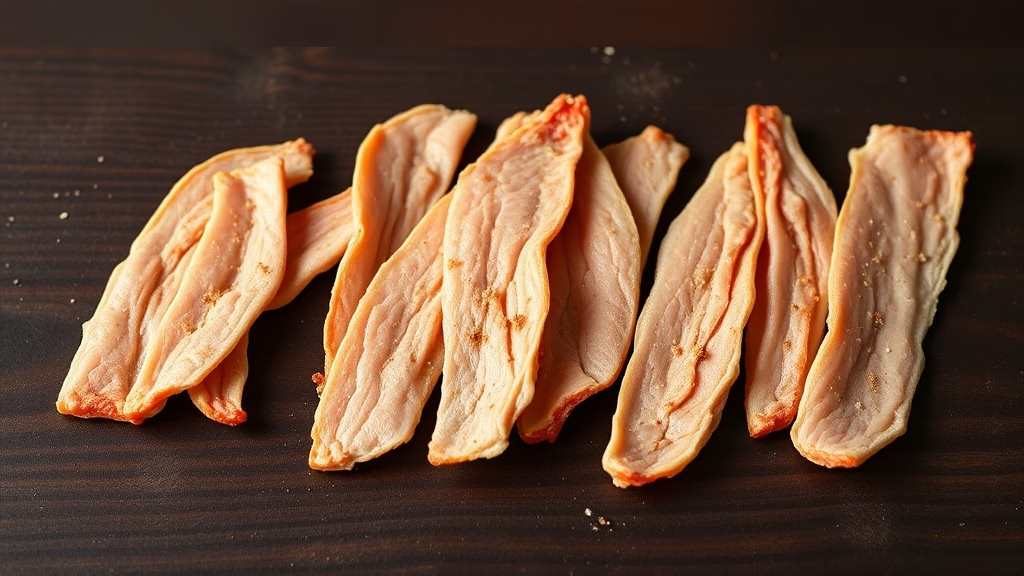
Slice the breast against the grain into strips 1/8 to 1/4 inch thick. Thinner = crisper and faster drying. Thicker = chewier with more moisture. Most people prefer 3/16 inch for snacking strips.
Unlike beef, turkey has less connective tissue, so slicing with the grain produces strips that fall apart when you bite them. Against-the-grain slices hold together while still being tender.
Step 3 — Marinate (6–12 Hours)
Combine in a zip-lock bag or container:
- 1/3 cup soy sauce
- 2 tbsp Worcestershire sauce
- 1 tbsp brown sugar
- 1 tsp garlic powder
- 1 tsp smoked paprika
- 1/2 tsp black pepper
- Optional: 1/4 tsp cayenne for heat
Add the strips, seal, and refrigerate for at least 6 hours — overnight is ideal. Turkey’s leaner muscle fiber absorbs marinade faster than beef, so you don’t need the full 24-hour soak that some beef recipes call for.
For more marinade variations — teriyaki, spicy sriracha, and brown sugar bourbon — check our jerky marinade recipe guide. All of them work with turkey breast.
Step 4 — Heat to 165 °F, then dry at 140 °F
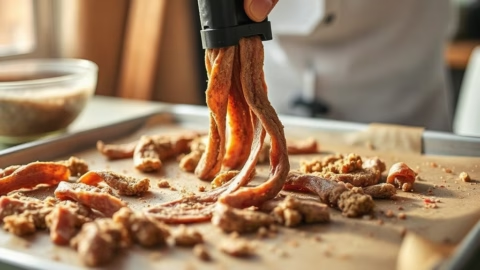
Remove strips from the marinade and pat dry with paper towels. Arrange on dehydrator trays or oven racks with at least 1/4 inch spacing between strips — airflow is everything.
Poultry has to reach an internal 165 °F to be safe (USDA FSIS), and a dehydrator will not get it there on its own: evaporation keeps the meat cool until it is nearly dry. So heat first, then dry. Bring the strips and marinade to a boil and boil for 5 minutes (NCHFP), drain, pat dry, and dry on racks at a steady 140 °F. Strips heated in marinade dry faster than the 10–24 hours NCHFP gives for unheated strips, so start checking after 3 hours. Our jerky calculator lays out the steps for your batch.
Start checking at the 3-hour mark. The jerky is done when it bends and cracks slightly but doesn’t snap cleanly in two. No soft, pliable spots — those mean moisture remains and the jerky will mold.
Step 5 — Cool and Store
Let strips cool completely on a wire rack — 30 to 60 minutes. Sealing warm jerky traps condensation and creates the conditions for mold. Once cool, pack in zip-lock bags, mason jars, or vacuum-seal bags. For storage timeline details, see our how long does jerky last guide.
Turkey Jerky vs. Buying Pre-Made
Per ounce, homemade turkey jerky is not always cheaper than commercial once you factor in the raw breast and pantry ingredients. Commercial options — we’ve ranked the best in our best turkey jerky buying guide — are competitive on cost but often contain more sodium and preservatives.
If you value knowing exactly what’s in your food, homemade wins. If convenience is the priority, that guide compares the leanest options on their published nutrition panels.
Common Mistakes to Avoid
- Uneven slices — some strips over-dry while others stay moist. Use a ruler or slicer for consistency.
- Skipping the pat-dry step — excess marinade on the surface steams rather than dehydrates the meat, producing a wet texture.
- Too much sugar in the marinade — brown sugar is important for flavor, but more than 2 tbsp per pound causes caramelization and stickiness on the dehydrator trays.
- Skipping the heating step — the drying temperature does not make poultry safe; reaching 165 °F internally does. Heat the strips before drying, then dry at a steady 140 °F.
Final Thoughts
Turkey jerky rewards a bit of prep — the freeze-and-slice step and the overnight marinade — with strips that compete with the best commercial options at a fraction of the cost. Once you dial in the thickness and temperature for your equipment, it becomes a routine batch process rather than a careful craft project.