
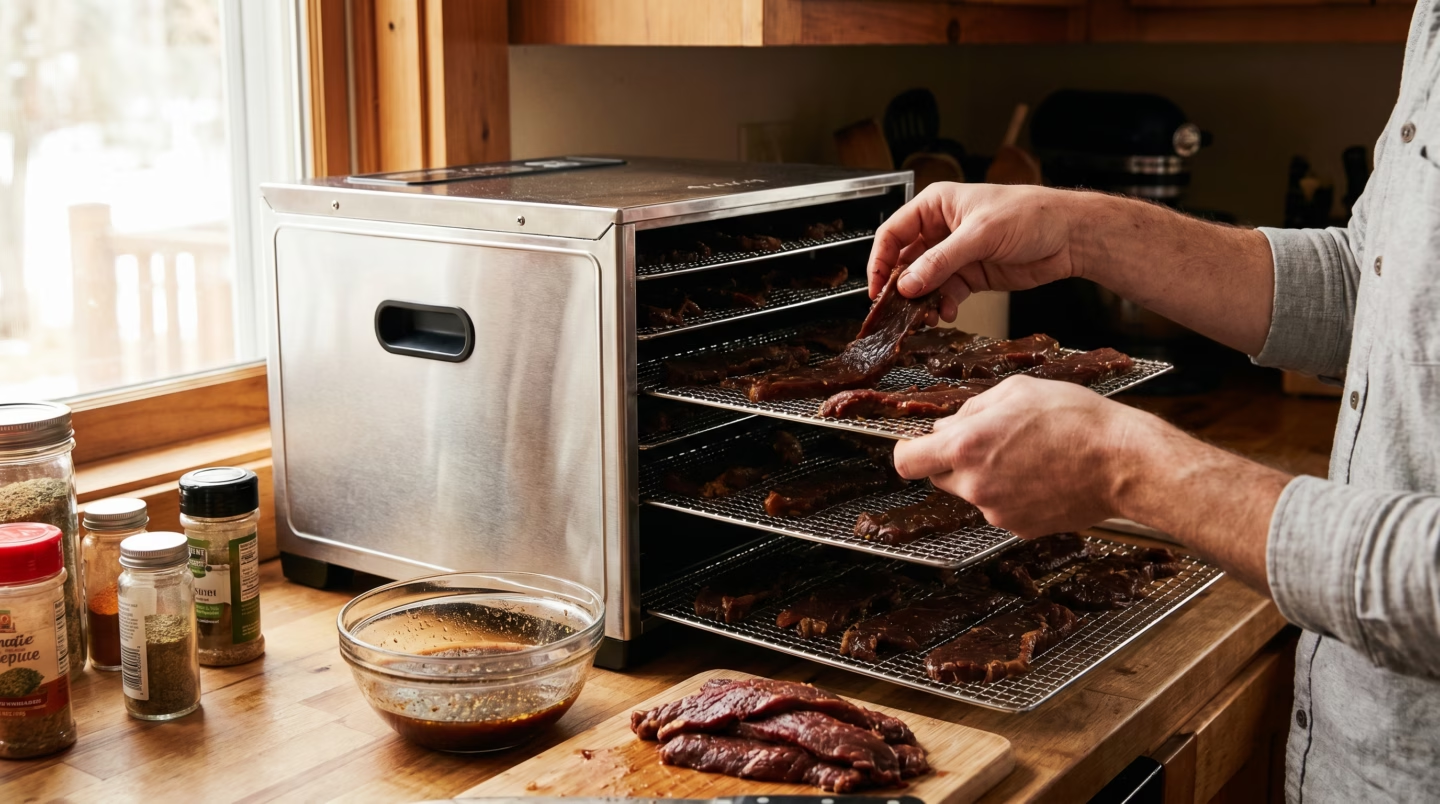
A dehydrator is the single biggest upgrade available to anyone making jerky at home, because it gives you two things a packet never will: control and cost efficiency. You choose the cut, the marinade, the thickness, and how far to dry it, and a single roast yields far more jerky than the same spend on bagged product. Commercial jerky also varies widely in how much sugar and how many fillers sit behind the branding, which is something you eliminate entirely when you make your own. Below are three machines compared on the specifications that matter, plus how to choose between them and how to dry meat safely.
Our top picks at a glance
Three very different tools, three different jobs. The COSORI is the one we recommend to most people, the Excalibur is for the volume crowd, and the LEM jerky gun is a companion tool for ground-meat jerky and snack sticks. Here is how they stack up before we dig into each.
| Tool | Best for | Capacity | Temp control | Airflow |
|---|---|---|---|---|
| COSORI Food Dehydrator | Best overall | 5–6 stainless trays | Precise digital temp + timer | Rear-fan, even |
| Excalibur 9-Tray Dehydrator | Best premium | 9 trays | Adjustable thermostat | Horizontal |
| LEM Jerky Cannon | Best for ground-meat jerky | Per-batch loads | N/A (use with dehydrator/oven) | N/A |
COSORI Food Dehydrator — Best Overall
The COSORI is the machine to choose if you are serious about jerky and do not want to overthink it. What matters most for jerky is even drying from tray to tray, more than any single spec-sheet number: nothing spoils a batch like one rack finishing while another stays tacky. COSORI’s rear-mounted fan is designed to address exactly that, and rear-fan layouts generally dry more evenly than bottom-heat stackable units, where tray rotation matters more.
The digital controls are the real selling point. You set a precise temperature and a timer, walk away, and trust it. For jerky that means holding a steady 140°F, the drying temperature NCHFP recommends, for the many hours a batch takes. The 5–6 stainless steel trays are easy to clean and don’t hold odors the way some plastic racks do. Over a few months it genuinely pays for itself versus buying bagged jerky.
What we don’t love: it takes up real counter space, and like any dehydrator, a batch is an hours-long commitment. This isn’t snack-on-demand gear. But for set-it-and-forget-it home jerky, it’s the easiest machine to recommend.
See the COSORI Food Dehydrator
Excalibur 9-Tray Food Dehydrator — Best Premium
If you make jerky in bulk, share it with a crowd, or process a whole hunting haul, the Excalibur is the step up. The headline is horizontal airflow: the fan and heating element sit at the back, pushing air across each tray evenly rather than up through a stack. In practice that means less rotating and more consistent results from the top tray to the bottom one, even when you load it heavy.
Capacity is the other reason to buy it. Nine trays is a lot of real estate, enough to dry several pounds of meat at once. The adjustable thermostat is precise and dials in cleanly for jerky temperatures, and the trays pull out so you can fit larger or thicker strips when you remove a shelf.
The honest downsides: it’s expensive, and it’s big. This is a box that earns a permanent spot on the counter or a shelf in the pantry, so it’s overkill if you only make a batch now and then. For high-volume makers, though, the even drying and capacity are worth the price.
See the Excalibur 9-Tray Dehydrator
LEM Jerky Cannon (Jerky Gun) — Best for Ground-Meat Jerky
A jerky gun isn’t a dehydrator, but it belongs in any honest gear guide because it unlocks a whole style of jerky. The LEM Jerky Cannon extrudes ground meat into uniform flat strips or round snack sticks, which you then dry in your dehydrator or oven. Ground-meat jerky is cheaper than whole-muscle, easier to chew, and lets you use less expensive cuts or even venison and turkey.
It suits buyers who prioritise consistency and speed. Loading the tube, swapping the strip or stick nozzle, and laying down even rows is genuinely fast, and uniform thickness means everything finishes at the same time. It’s also the friendliest path for folks who find slicing whole muscle intimidating.
Two honest caveats. It only works with ground meat, so it won’t replace a knife-cut whole-muscle workflow. And for big batches the hand squeezing gets tiring; your forearm will know you made a few pounds. Pair it with one of the dehydrators above and you’ve got both styles covered.
How to choose the best jerky dehydrator
Picking the best jerky dehydrator comes down to a handful of things that actually affect your jerky, not the marketing on the box. Here is what to weigh.
Horizontal vs. vertical airflow
Vertical (rear- or bottom-fan stacked) units are compact and affordable, and good ones like the COSORI dry evenly. Horizontal airflow, as in the Excalibur, pushes air across each tray from the back, which tends to be the most even and forgiving when trays are loaded heavy. If you dry big batches often, horizontal is worth the premium; for most home makers, a quality vertical unit is plenty.
Temperature control and food safety
This is non-negotiable. You want a machine that holds a real, accurate temperature, not just “low/medium/high.” Keep the two numbers straight: USDA FSIS recommends that the meat reach an internal 160°F (165°F for poultry), reached with a separate heating step, and that drying then run at a steady 130–140°F. A dehydrator that holds 140°F accurately is what you are paying for. For the full rundown on safe handling and temperatures, see the USDA guidance on jerky and food safety.
Tray capacity and material
Match capacity to how much you actually make. Five to six trays suits most households; nine trays is for volume. Stainless steel trays are worth favoring over plastic: they clean up more easily, hold no odors and stand up to the acidic marinades jerky relies on.
A jerky gun for ground meat
If you want ground-meat jerky or snack sticks, a jerky gun like the LEM is the missing piece. The dehydrator dries it; the gun shapes it. They’re complementary tools, not competitors.
Noise and footprint
Every dehydrator hums, and bigger fans run louder. None of these are disruptive, but if your kitchen is open-plan, the COSORI runs quieter than a big nine-tray box. And be realistic about counter space — these stay out while they work, sometimes for half a day.
How we evaluate
Coverage on this site is documentation-based. We read current manufacturer pages and manuals, ingredient and specification panels, packaging information where it is publicly visible, retailer listings, and applicable regulatory or certification records. We state which source a claim comes from.
A page does not say a product was bought, consumed, worn, brewed, or laboratory-tested unless it publishes a dated protocol, the sample source, the conditions, and the evidence. We do not publish invented prices, stock levels, certifications, ratings, or test results, and product pages carry no star score.
Jerky and biltong comparisons focus on what a label can support: protein per ounce, added sugar and sodium, the cut and protein source, curing method, stated certifications such as grass-fed or nitrate-free, and package size against price per ounce.
Flavor, tenderness, chew, and aroma are sensory outcomes. We do not describe them as measured findings, and we do not publish tasting notes as though a panel produced them.
FAQ
What temperature should I dry jerky at?
Two different temperatures matter. The meat itself has to reach 160°F (165°F for poultry), which USDA FSIS recommends achieving with a separate heating step, because a dehydrator rarely gets meat that hot on its own. The drying itself happens at a steady 130–140°F (FSIS), with NCHFP recommending 140°F. Precise digital control matters because it holds that drying temperature accurately for hours.
How long does jerky take in a dehydrator?
NCHFP puts it at 10 to 24 hours at 140°F for ¼-inch strips that were not heated in marinade; strips boiled in their marinade first dry faster. Start checking after 3 hours. Jerky is done when a cooled piece cracks but does not break when you bend it. Our jerky calculator plans the timing and the safety step for your batch.
Dehydrator vs. oven — which is better?
An oven can absolutely make jerky, but most home ovens don’t hold low temperatures well and have no airflow, so results are uneven and you’re tying up the oven for hours. A dehydrator gives you steady low heat, consistent airflow, and better, more repeatable batches. If you make jerky more than once or twice, the dehydrator wins.
Do I need a jerky gun?
Only if you want ground-meat jerky or snack sticks. For whole-muscle jerky, a sharp knife and a steady hand are all you need. If you like the tender, uniform texture of ground-meat jerky or want to use cheaper cuts, a gun like the LEM makes it fast and consistent.
Can I make jerky from ground meat?
Yes, and it’s one of the most budget-friendly ways to do it. Use a jerky gun to extrude even strips or sticks, then dry them on your dehydrator trays at 140°F, making sure the meat also reaches the 160°F internal temperature USDA FSIS recommends (165°F for poultry). Lean ground meat works best so the fat doesn’t go rancid.
Are stainless steel trays worth it?
Generally, yes. Stainless trays clean up faster, don’t absorb odors and stand up to acidic marinades better than plastic over the long haul. It’s a small quality-of-life upgrade you’ll appreciate every batch.
The verdict
For most people, the COSORI is the best jerky dehydrator: even drying, precise digital control, and stainless trays at a price that pays for itself fast. Make jerky in bulk and the Excalibur 9-Tray is the premium pick. Want ground-meat jerky and snack sticks? Add the LEM Jerky Cannon alongside either one. Browse the full lineup in our jerky makers category, and once your gear’s dialed in, put it to work with our guides to the best beef jerky and the best exotic jerky. Now go make a batch — your wallet and your snack drawer will thank you.