
Dehydrating time and temperature are the two variables that control whether your jerky comes out perfectly chewy, disappointingly soft, or inadvertently brittle. Getting this right requires understanding what you are actually doing to the meat, not just following a single time recommendation that may not match your dehydrator, your meat thickness, or your humidity level.
The USDA-safe temperature for beef jerky
USDA FSIS recommends heating the meat to an internal 160°F (71°C) — 165°F (74°C) for poultry — as part of making jerky, so that bacteria such as E. coli O157:H7 and Salmonella are destroyed by moist heat. That is a meat temperature, not a dehydrator setting. After the heating step, FSIS advises holding the dehydrator at a steady 130–140°F while the meat dries.
The separate heating step matters for a counterintuitive reason. In a dehydrator, evaporating moisture absorbs most of the heat, so the meat barely warms up until it is nearly dry. By then, FSIS notes, bacteria have become more heat-resistant and are more likely to survive. Most dehydrator instructions leave this step out.
The National Center for Home Food Preservation (NCHFP) describes two ways to build it in:
Heat before drying. Bring the strips and their marinade to a boil and boil for 5 minutes, then drain and dry. Strips heated this way dry faster.
Heat after drying. Dry the strips first, then heat them for 10 minutes in an oven preheated to 275°F. NCHFP describes this for strips that were originally ¼ inch thick or less.
For venison and other wild game, NCHFP adds a step before any of this: freeze a portion 6 inches thick or less at 0°F or below for at least 30 days to address trichinella.
Time and temperature guide
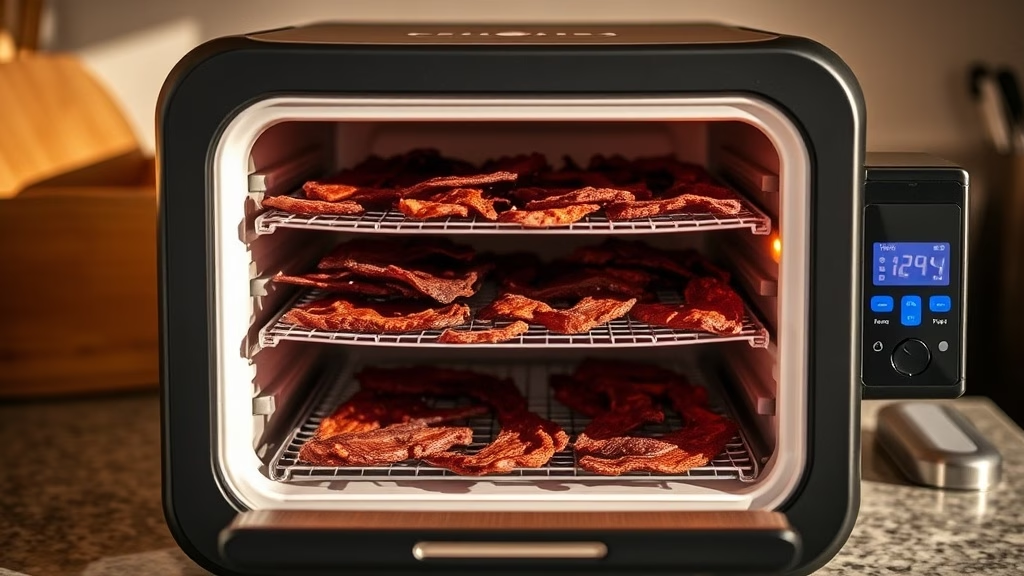
NCHFP’s method is to slice meat no thicker than ¼ inch (6 mm) and dry it on racks in a dehydrator or oven preheated to 140°F (60°C). Strips that were not heated in marinade take 10 to 24 hours; strips boiled in marinade first dry faster. Begin checking after 3 hours either way, because dehydrators, cuts and fat content vary widely.
- Slice thickness: ¼ inch or thinner. Thicker strips dry more slowly, and the after-drying oven step is only described for ¼-inch strips.
- Dehydrator setting: 140°F, preheated and held steady (FSIS: 130–140°F).
- Not heated in marinade: 10–24 hours.
- Boiled in marinade first: faster; check from 3 hours.
Stackable dehydrators with uneven airflow tend to dry the trays nearest the heater first, so rotating trays partway through gives a more even batch.
Plan your batch
Enter your meat, weight and heating method to get the safe temperature, dryer setting, drying window and expected yield in one place. The same tool lives on its own page as the jerky calculator.
Plan a batch that is safe first and tasty second. Every figure below comes from USDA FSIS, the National Center for Home Food Preservation (NCHFP) or Cornell Cooperative Extension, and each result shows where it came from. Nothing you enter leaves your browser.
Your batch
Your plan
Working backwards
Buy about 4 lb of meat before trimming losses.
What this planner does not do
It cannot measure your meat. Use a probe thermometer to confirm the safe temperature, because dehydrators often never reach it: USDA FSIS notes that evaporating moisture absorbs most of the heat, so the meat only warms up once it is nearly dry — by which point bacteria have become more heat-resistant. The yield figure is a planning estimate; fat content, trim and how dry you like it all change the result.
- Expected jerky = trimmed raw weight ÷ 4 (Cornell Cooperative Extension)
- Meat to buy = target jerky × 4
- Done when a cooled test piece cracks but does not break when bent (NCHFP)
How to test for doneness
The bend test is the most reliable field method. Remove a piece from the dehydrator, let it cool for 5 minutes (jerky appears more moist when warm), then bend it. Properly dried jerky should bend without breaking cleanly but should show white fibers and possibly crack slightly at the bend point. Jerky that snaps completely is over-dried. Jerky that bends without any cracking or visible white fibers is under-dried.
The jerky should feel firm and dry to the touch — not tacky or leathery. Tacky surface means moisture remains and will encourage mold during storage.
Variables that extend drying time
Marinade sugar content. High-sugar marinades (teriyaki, honey-based) create a sticky surface that slows moisture evaporation, so heavily sweetened jerky can take noticeably longer.
Fat content in the meat. Fat does not dehydrate cleanly and creates soft spots in finished jerky. Lean cuts (eye of round, top round, flank steak) dry more quickly and evenly than fattier cuts.
Ambient humidity. High-humidity environments slow dehydration measurably. If your kitchen is humid, expect a longer run rather than turning the heat up.
See our dehydrator reviews for specific gear recommendations, or our beef jerky rankings for the best commercial options.
Quick Answers
What temperature should you dehydrate beef jerky at?
Set the dehydrator to 140°F (60°C) and keep it steady; USDA FSIS advises 130–140°F during drying. Separately, the meat itself has to reach 160°F (71°C), or 165°F (74°C) for poultry, and most dehydrators cannot manage that on their own. Add a heating step: boil the strips in their marinade for 5 minutes before drying, or heat the dried strips for 10 minutes in an oven preheated to 275°F (NCHFP).
How long does beef jerky take in a dehydrator?
At 140°F, NCHFP puts it at 10 to 24 hours for ¼-inch strips that were not heated in marinade. Strips boiled in marinade first dry faster. Start checking at 3 hours and go by the bend test, not the clock.
How long to dehydrate beef jerky at 160 degrees?
Neither USDA FSIS nor NCHFP publishes a drying time for a 160°F dehydrator setting. Their guidance is a 130–140°F dryer plus a separate step that brings the meat to 160°F. A hotter setting dries faster than the 10–24 hours NCHFP gives for 140°F, but a 160°F air temperature does not guarantee the meat reaches 160°F inside, because evaporation keeps the meat cool until it is nearly dry. Keep the heating step and start checking at 3 hours.
Can you dehydrate jerky at 145°F or 155°F?
Yes, as the drying temperature; NCHFP’s own method dries at 140°F. What makes the jerky safe is the separate heating step that takes the meat to 160°F (165°F for poultry): boil the strips in marinade for 5 minutes before drying, or give the dried strips 10 minutes in a 275°F oven.
How do you know when jerky is done?
Bend a cooled strip. NCHFP’s test is that it cracks but does not break. If it snaps cleanly it is over-dried; if it bends with no cracking or feels tacky, moisture remains and it will not keep. Always cool the test piece first, because warm jerky feels softer than it is.
Is it better to dehydrate jerky longer at a lower temperature?
Longer is not the goal. Dry at a steady 140°F until a cooled piece cracks without breaking, and rely on the separate heating step, not the dryer temperature, to make the meat safe. USDA FSIS notes that drying has to be fast enough to dry food before it spoils, so very low settings that stretch the run out are a poor trade.
Do you need to flip jerky in a dehydrator?
Usually not, since dehydrators circulate air around the strips. Rotating trays top-to-bottom partway through helps on stackable units that dry unevenly.