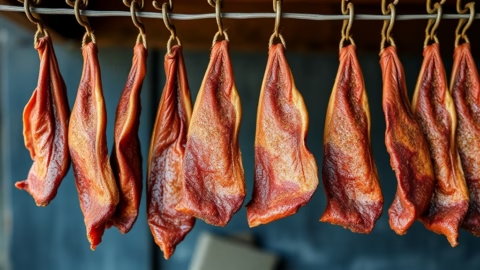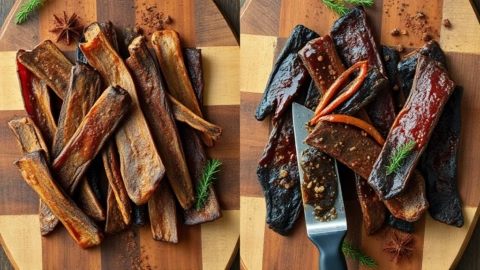

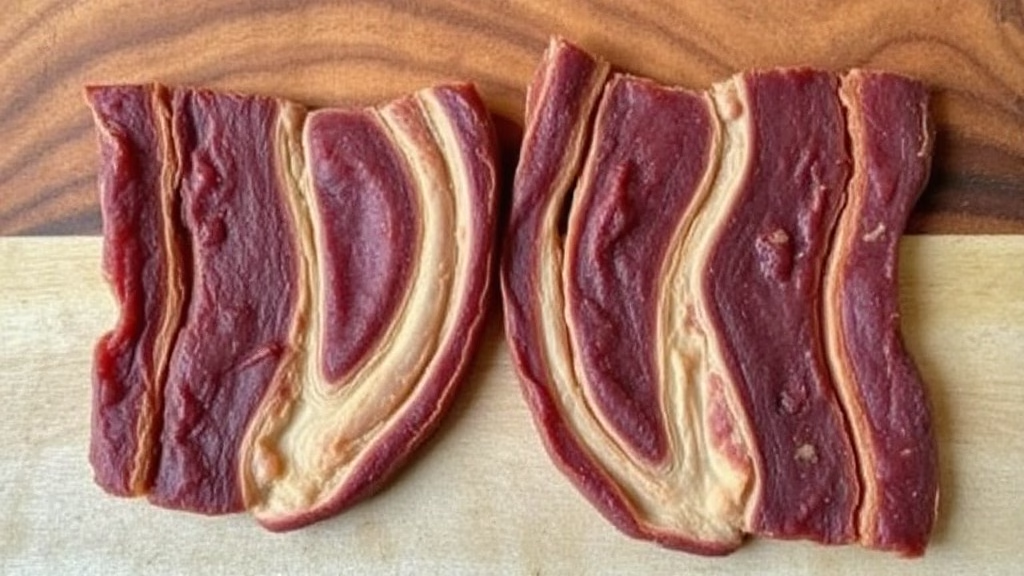
Unlike jerky, which is almost always fully dried, biltong exists on a spectrum from wet (soft, almost rare in the center) to fully dry (firm throughout). Both are authentic, traditional styles — the difference is largely regional and personal preference within South African biltong culture, not a matter of one being “correct” and the other undercooked.
If you haven’t made biltong before, start with our full biltong recipe for the base cure and drying process. This article focuses specifically on the wet-vs-dry decision within that process.
What “Wet” Biltong Actually Means
Wet biltong is dried for a shorter period — typically 3–4 days in a properly ventilated setup — leaving the center noticeably softer and darker than the outer surface, with visible moisture when you cut into it. It is not raw or unsafe; the curing process (salt and vinegar) has already done its preservation work by this point, and the exterior has fully dried and case-hardened. This is the more traditional South African preference, often described as having a richer, more intense flavor since less moisture (and the flavor compounds carried in it) has evaporated out.
What “Dry” Biltong Actually Means
Dry biltong continues in the drying setup for 5–7 days or longer, until the center reaches roughly the same firmness as the exterior. It has a longer shelf life at room temperature, travels better, and has a more concentrated, slightly more intense saltiness since more moisture has left the meat relative to the fixed amount of salt absorbed during curing. This style is closer to what most non-South African consumers expect when they hear “biltong,” and it’s the more common style for commercial, shelf-stable products.
How to Control Which One You Get
The variable is simply time in the drying setup, assuming your temperature and airflow are consistent (65–75°F, steady fan airflow, low humidity — see the full setup in our biltong recipe guide):
- For wet biltong: check daily starting on day 2. Squeeze the thickest piece — it should give noticeably but not feel raw or slippery. Most batches hit wet-style doneness around day 3–4.
- For dry biltong: continue past the wet-style point until the thickest piece feels uniformly firm with only slight give when squeezed. Most batches reach this around day 5–7, depending on strip thickness and your specific drying conditions.
Strip thickness affects timing more than almost any other variable — thicker cuts (closer to 1 inch) take meaningfully longer to reach either doneness point than thinner cuts (closer to 1/2 inch), so if you’re aiming for a specific style consistently, keeping your strip thickness consistent batch to batch matters as much as the drying time itself.
Storage Differences
Wet biltong, having retained more moisture, has a shorter shelf life — roughly 1 week at room temperature wrapped in paper, longer refrigerated. Dry biltong keeps significantly longer at room temperature, 2 weeks or more, since there’s simply less moisture available to support bacterial or mold growth. If you’re making a large batch to portion out over time, drying to the fully dry stage is the more practical choice; if you’re eating it within a few days, wet biltong is worth the shorter shelf life for the flavor and texture.
Can You Convert One to the Other?
You can always continue drying wet biltong further to reach dry-style doneness — simply rehang it and check again in a day or two. You cannot reverse the process; once biltong has reached the dry stage, there’s no practical way to restore the wet-style texture short of rehydrating it, which changes the product significantly and isn’t traditional practice.
Which Should You Make First?
If this is your first batch, err toward checking more frequently and pulling it at the wet stage — you can always continue drying a piece further if you find you prefer it firmer, but you can’t undo over-drying. Once you know your equipment’s drying speed and your personal preference, you can time future batches more precisely toward whichever style you’ve decided you like.
See our tested biltong picks if you want to sample both styles from established producers before committing to a home batch.