
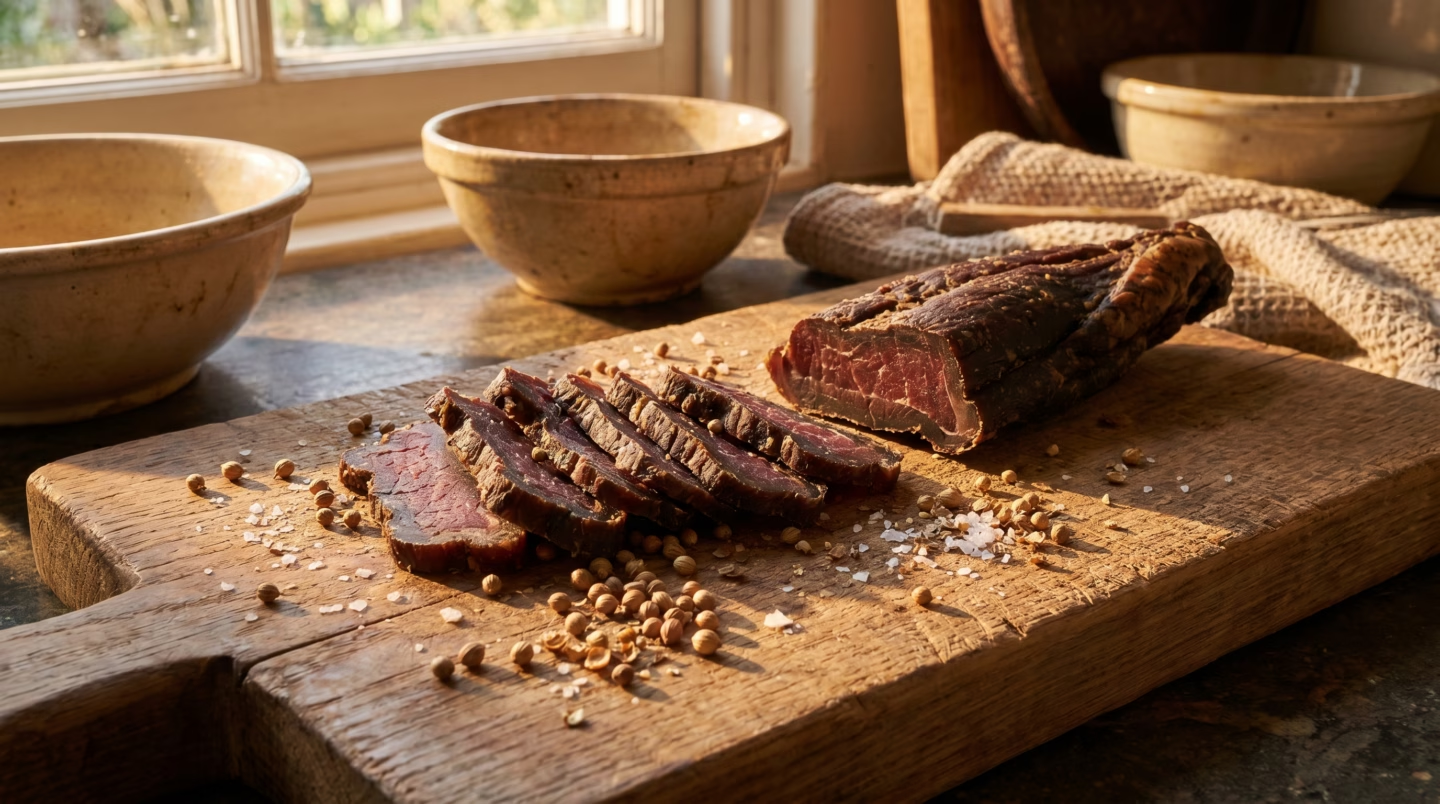
Finding the best biltong means looking past the jerky aisle and into a different tradition entirely. Biltong is an air-dried, spiced beef snack born in South Africa, and once you’ve had a good piece, the difference is obvious. Where American jerky is usually marinated, smoked, and dried with heat, biltong is cured with vinegar and salt, dusted with coriander and spice, then hung to air-dry slowly. The result is tender, beefy, and clean-tasting rather than smoky and tough. This page compares three biltong brands worth considering, what sets them apart on curing method and ingredients, and how to pick the right one for your taste.
Our top picks at a glance
Each of these is air-dried and made without added sugar, which is the baseline for honest biltong. Where they part ways is spice intensity, texture, and price. Here’s the quick comparison before we get into the detail.
| Brand | Best for | Spice level | Texture | Added sugar |
|---|---|---|---|---|
| Kalahari Biltong (Original) | Best overall | Bold, coriander-forward | Tender, sliceable | None |
| Ayoba-Yo Biltong | Best value | Mild, approachable | Thin, tender slices | None |
| Stryve Original Biltong | Best sugar-free / leanest | Mild, clean | Tender, not chewy | None |
1. Kalahari Biltong (Original) — Best Overall
If you want to understand what biltong is supposed to taste like, start with Kalahari. The Original leans into a classic, coriander-forward spice profile that’s warm and a little citrusy, sitting right on top of clean, beef-forward flavor. It’s air-dried and sugar-free, so nothing sweet gets in the way. The slices are tender and genuinely sliceable rather than rubbery, and the protein density is among the highest listed on a packaged biltong label.
It suits buyers who want a traditional style and are less price-sensitive. It eats like something a South African maker would recognize, not a watered-down export version.
Pros: authentic coriander-led spice; tender, sliceable texture; very high protein; no added sugar. Cons: premium price, and that bold coriander note isn’t for everyone, especially if you’ve never had it before.
See full details on our Kalahari Biltong product page.
2. Ayoba-Yo Biltong — Best Value
Ayoba-Yo is the one to start with if you are new to biltong or feeding a household that won’t all agree on spice. The slices are thin and tender, and the seasoning is milder and more approachable than Kalahari’s, so it’s an easy first step. It’s also made without added sugar. For the price per bag, it’s the best entry point on this list.
It won’t blow away a seasoned biltong fan looking for intensity, and that’s fine, that’s not its job. It’s the crowd-pleaser.
Pros: thin, tender slices; milder, beginner-friendly spice; no added sugar; strong value. Cons: slices can dry unevenly from bag to bag, and the flavor is noticeably less bold than Kalahari.
Check current details on our Ayoba-Yo Biltong product page.
3. Stryve Original Biltong — Best Sugar-Free / Leanest
Stryve earns its spot for anyone who’s watching macros closely. It’s air-dried with zero sugar, very high in protein, and noticeably lean. The texture is the headline here: it’s tender rather than chewy, which is part of biltong’s appeal but can surprise jerky eaters who expect a tougher bite. The spice is clean and restrained, letting the beef do the talking.
Stryve is the gym-bag pick: the one to choose if you are tracking protein and don’t want sweeteners sneaking in.
Pros: air-dried and zero sugar; very high protein; lean; tender, not chewy. Cons: the soft, tender texture takes some adjusting if you’re coming from traditional American jerky.
More on our Stryve Original Biltong product page.
How to choose the best biltong
Picking the best biltong comes down to a handful of decisions about how it’s made and how you like to eat it. Here’s what actually matters once you’re standing in front of a few bags.
Air-dried vs smoked
True biltong is air-dried, not smoked. The beef is cured with vinegar and salt, then hung to dry in cool, moving air. That’s what gives it a clean, tangy, beef-forward taste instead of the campfire note you get from jerky. If a product tastes smoky, it’s drifting toward jerky territory. All three picks here are properly air-dried.
Spice and coriander
Coriander is the signature biltong spice, often paired with black pepper and a vinegar tang. Some people love that warm, slightly citrusy edge; others find it unfamiliar at first. Kalahari leans into it boldly, while Ayoba-Yo and Stryve keep it milder. If you’re unsure, start mild and work up.
Sugar-free and protein
Authentic biltong doesn’t need sugar, and the best versions skip it entirely. That keeps the flavor savory and the macros lean. Because the beef is dried down so far, biltong is also extremely protein-dense by weight, which is a big part of why it’s such a satisfying snack. All three picks are sugar-free and high in protein.
Sliced vs whole
Biltong comes sliced or as a whole dried piece you cut yourself. Sliced bags, like the ones here, are convenient and ready to eat, though slices can occasionally dry unevenly. A whole piece lets you control thickness but takes more effort. For most snackers, sliced is the easy call.
Texture
Good biltong is tender and yielding rather than tough and chewy. That’s a feature, not a flaw, but it can catch jerky fans off guard. If you want the most traditional tender bite, Kalahari and Stryve both deliver it well.
How we evaluate
Coverage on this site is documentation-based. We read current manufacturer pages and manuals, ingredient and specification panels, packaging information where it is publicly visible, retailer listings, and applicable regulatory or certification records. We state which source a claim comes from.
A page does not say a product was bought, consumed, worn, brewed, or laboratory-tested unless it publishes a dated protocol, the sample source, the conditions, and the evidence. We do not publish invented prices, stock levels, certifications, ratings, or test results, and product pages carry no star score.
Jerky and biltong comparisons focus on what a label can support: protein per ounce, added sugar and sodium, the cut and protein source, curing method, stated certifications such as grass-fed or nitrate-free, and package size against price per ounce.
Flavor, tenderness, chew, and aroma are sensory outcomes. We do not describe them as measured findings, and we do not publish tasting notes as though a panel produced them.
FAQ
What’s the difference between biltong and jerky?
Jerky is typically marinated, often smoked, and dried with heat, giving it a chewy, smoky character. Biltong is cured with vinegar and salt, spiced with coriander, and air-dried slowly without smoke, so it’s more tender and beef-forward. For more, see the Wikipedia entry on biltong.
Is biltong healthier than jerky?
It depends on the product, but biltong has some natural advantages: it’s commonly made without added sugar and is very high in protein. The three picks here are all sugar-free. Always check the label, since seasonings and salt vary between brands.
Why is there coriander in biltong?
Coriander is the traditional defining spice of biltong, usually alongside black pepper and a vinegar cure. It adds a warm, slightly citrusy note that balances the rich beef. It’s so central to the style that biltong without it tastes incomplete to most fans.
How should I store biltong?
Keep an unopened bag in a cool, dry spot away from direct sunlight. Once opened, reseal it tightly and, if you won’t finish it quickly, refrigerate it to keep the texture right and slow any moisture issues. Because biltong is air-dried, it doesn’t like humidity.
Is biltong gluten-free?
Plain air-dried biltong made with beef, vinegar, salt, and spices is generally gluten-free, but ingredients differ by brand and some flavored versions add other components. If you’re sensitive, always confirm on the individual product label rather than assuming.
The verdict
For the best biltong overall, Kalahari Biltong (Original) is our pick: authentic, bold coriander spice, tender texture and serious protein, as long as the premium price and big flavor suit you. If you want the easiest entry or the best value, Ayoba-Yo is the friendly, milder choice. And if you’re chasing the leanest, strictly sugar-free option, Stryve is the one to grab.
Whichever you choose, buy from a maker who keeps it air-dried and honest. Browse the full biltong category for more options, and if you’re weighing biltong against other snacks, see our guides to the best beef jerky and the best exotic jerky.